
Future Focus
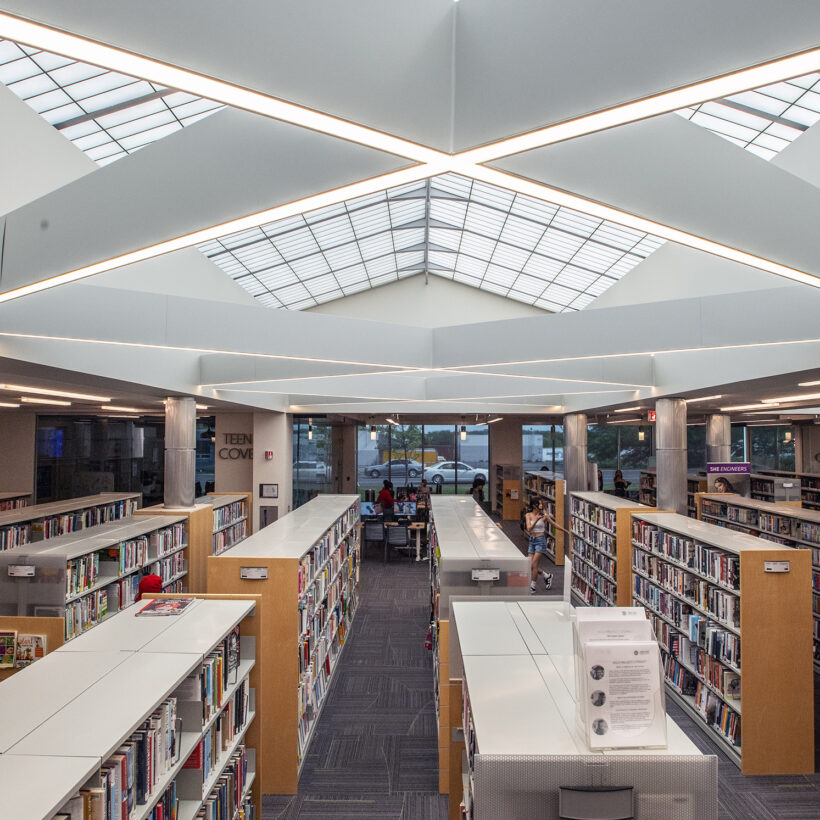
Our decision-making about facilities has been guided by a Facilities Assessment and Master Plan first published in 2004. The 2004 Master Plan established a clear vision and framework for the system’s facilities in Howard County through 2030, and recommended a series of capital projects to build capacity to ensure adequate service to the growing community.
Since 2004, we implemented many of the recommendations of the 2004 Master Plan. Renovations, expansions, and newly constructed facilities significantly increased our programming capacity. Over that time, some of the assumptions behind the recommendations have evolved, and new circumstances and opportunities have arisen that were not predicted in the 2004 Master Plan.
Significant changes include:
- Howard County has grown faster than was anticipated in 2004; by 2018, the population had already exceeded the previous projection for 2030. It has been the fastest growing county in Maryland over the past eight years, according to the Baltimore Sun (Nocera, 2019). Recent projections predict that Howard County could grow by as much as 16 percent over the next decade. This will place additional requirements on The Libraries facilities and increase demand for service.
- Current development plans and construction will create an even bigger and more diverse population center in downtown Columbia than was forecast in 2004. Along with millions of square feet of retail, commercial, and hospitality space, a new mix of market-rate and affordable housing is anticipated to create a vibrant new metropolitan area in the heart of Howard County.
- Due to the downtown Columbia revitalization and redevelopment project, The Library’s second-largest facility – the Central Branch – is slated for demolition. This was not anticipated in the 2004 Master Plan. In 2019, HCLS initiated a process to revisit and adjust the Master Plan recommendations. Group 4 Architecture, Research + Planning, Inc. was commissioned to facilitate the process, which included interviews and discussion with Library leadership and staff as well as input from the Library Board and the community.
In 2019, Howard County Library System initiated a process to revisit and adjust the Master Plan recommendations.
Group 4 Architecture, Research + Planning, Inc. was commissioned to facilitate the process,which included interviews and discussion with HCLS leadership and staff as well as input from the Library Board and the community.
Needs Assessment Update
As in 2004, Howard County continues to be a community of choice that attracts and retains residents with its convenient location, top-rated education system, strong business community, and high quality of life. The Library is integral to the educational attractiveness of the county. The Library is a provider of self-directed, instructional, and enlightening experiences that are available to all citizens regardless of their socioeconomic status or other factors. Additionally, The Library has a strong partnerships with the school system, community college, local and state government, and other organizations essential to the county’s success.
Community survey respondents confirmed that The Library services and resources are highly valued and responsive to community needs. Hundreds of survey respondents took the time to leave positive comments expressing their love for the library system and its commitment to education. However, survey respondents also noted that libraries in Howard County do not fully meet their expectations for services and can often feel crowded. Indeed, The Library’s facilities appear to be operating at full capacity in terms of their collections, shelving, meeting spaces, classrooms, and study spaces, as well as staff and storage spaces.
HCLS has not yet achieved the space planning target established in the 2004 Master Plan, which recommended providing 1 square foot of library space for every Howard County resident. It also has not yet realized the 2004 Master Plan’s recommended vision for the Central Branch as a countywide destination with unique, high-impact services and spaces. These deficits affect the library’s ability to provide service today, both locally and systemwide – and these effects will increase and intensify as the population
grows over the next decade.
2019 Recommendations
Based on state standards, development projections and construction underway, transportation forecasts, community members’ input, and the fate of the existing Central Branch building, the updated Master Plan recommendations for the library’s capital projects are as follows:
- New Downtown Columbia Branch: An opportunity has emerged for HCLS to develop approximately 100,000 square feet of new space less than one mile from the current Central Branch, in the proposed Merriweather District of the downtown Columbia development. HCLS should take advantage of this opportunity. This will enable HCLS not only to maintain high-quality services, but also to expand its curriculum to meet current needs and emerging trends related to education, business, culture, and the arts. Given the imminent demolition date, the Central Branch project should be a high priority for HCLS, the county, and citizens.
New Branch: To achieve the state requirement of 1 SF/capita target, HCLS needs to add another full-service branch of approximately 30,000-50,000 square feet, depending on 2030 population size (projections vary). While slated for the southwestern area of the county, the location for this new branch may be determined based on community growth and development.
Together, these two projects could expand HCLS’ facility capacity by more than 40 percent.
Related Articles
Microfiche

Celebrate Disability Pride Month
Children's Internet Use
View all available resources on our Research Page
We’re here to help.